Showing posts with label More Training And Tips. Show all posts

Sunday, 1 December 2013

Dog Listening – a different approach to training your dog


Jase, Cooper and I have just completed a four week Dog Listener training course so I thought I would share our experience with you all and hopefully inspire you to take on this concept yourselves.
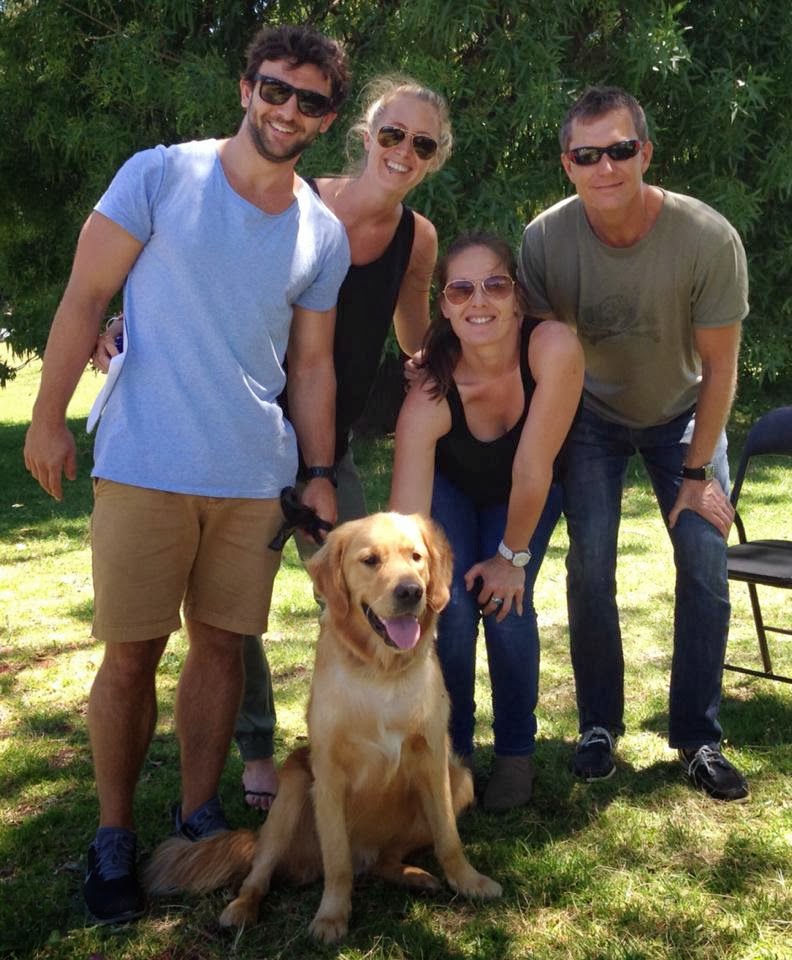
Jase, Coop, Hayley, Tony and myself at training
Cooper has become such a good boy when we are at home. He is calm and obedient and comes when called. But when we go out, that is when things change. His biggest issue is pulling on the lead and his overexcitement at times. I can walk him in a quiet street with a slack lose lead if there are no dogs around, no problem. But bring dogs or young kids in the mix or any other big distractions, and he is strong, persistent and hard work to control. There is no doubt Cooper is a boisterous dog. He is also still young (almost 16 months) so with age, he will calm down, as long as we give him the correct information to do so.
Cooper and his girlfriend Abby. Abby has also done this course and they get to practise together a few times a week. Once they have calmed down, they get to play with each other and they love it!
Jase and I both read Jan Fennell’s book ‘The Dog Listener’ and we just loved the idea behind her approach. We had tried chock chains, gentle leaders and the harness and were not seeing great results. We then saw Tony Knight (Jan Fennell’s son) speak a couple of months ago. And after taking on some of the ideas behind this concept, we decided that we needed to see it in practice. Hayley Wright from Taking the Lead (https://www.facebook.com/takingtheleadtraining) and Tony Knight ran the course and they were fantastic.

The idea behind Dog Listening is that good leadership needs no force, gadgets or dependence on exercise to change a dog's mind. Good communication at critical times is what’s required. Every pack needs a leader and if you do not show those leadership skills, your dog will take on this responsibility and this can become quite stressful for your dog. Dog Listening looks at it from a dogs point of view. Dogs descended from wolves and are pack animals; so all the ideas behind this approach are focused on how a dog establishes its leadership in a pack. Amichien Bonding is the approach we use to get there. “'Amichien Bonding’ gives you a full understanding of why a dog does what it does and a simple way to shape desired behaviour and quietly corrects undesirable behaviours without the use of force, fear, frustration, drugs or gadgets.” (source: http://www.janfennellthedoglistener.com)

Cooper and his cousins - Roxy and Harley. We did a lot of Stop Start Change Direction with Cooper before letting him off the lead to play with them - and he was so much calmer because of it.
Amichien Bonding uses the language that all dogs already understand and all humans can learn.
There are four key elements that are the prime motivators in your dog’s life:
(1) Status - Do you fuss your dog when it comes to you for attention, without its first being asked or invited?
(2) Food -Are you deciding when and where your dog eats?
(3) The Hunt -Does your dog pull on the lead when or walk calmly by your side?
(4) Perceived Danger - Does your dog trust you to take care of anything it perceives as danger or does it over react and try to take control of the situation?

I actually posted a couple of months ago, when I first heard Tony speak, about how you can establish yourself as the leader of the pack using these ideas so feel free to have a read of this too - http://mydogjourney.blogspot.com.au/2013/05/are-you-leader-of-your-pack.html.

After completion of the course, we have learnt that we need to be patient and really see this as a lifestyle change. Plan ahead, get to places earlier so you have the time to calm your dog. When he pulls you, go the other way. If he wants to say hi to another dog, he can, but as long as you get there first. Stop Start Change Direction has changed the way we do things. Everywhere we go, if Cooper pulls on the lead, we turn around and go the other way. It needs to be your decision. You need to show your dog that you are in charge of all aspects in life for your dog to understand that you are in charge. You need to decide when to feed your dog, when to play with your dog, where you are going, if something is dangerous, when the walk starts and finishes, etc.. This approach also teaches you to appreciate your dog for who they are and why they do the things they do – they are dogs after all and dogs bark, dig, roll in mud and pick up dead animals.
 
Cooper interacting with another Golden during the course. The lead is slack and we have walked him over to the dog, not the other way around.
Through the course, we have really been able to see the behaviours that Cooper uses to try and establish himself as the leader. He pulls on the lead, he always tries to get that first bit of eye contact when we walk in the room, he brings us the ball when he wants to play, when we call him to us – he sometimes stops a meter in front so we have to go to him, when we call him over to put the lead on him he ducks his head, the list goes on.  But Jase and I now feel that we are equipped with the right knowledge and skills to stop these behaviours and make Cooper believe that we are the leaders of the pack.
Cooper nudging me with a ball to play with him. I need to initiate play, not the other way around, so i just ignored him.
Another one of Cooper trying to initiate play. It is hard to say no to that face - but you really need to be tough for them to get it. Wait till he has left you alone and then you can initiate the play.
From our experience with Cooper, I can tell you now that Amichien Bonding is not an easy quick fix. It is more of a life style change. You need to be patient and persistent and you really will see a change for the better. Just remember, your dog is always testing you and asking you for answers to establish who is in charge, so you really need to know how to read these signals and give your dog the right answers all the time. Once your dog knows that you are the leader of the pack and can protect and provide for your pack, they will be a much happier and relaxed dog. And you will form an even more beautiful relationship with mans best friend then you ever imagined.
Cooper calm and relaxed, taking a dip in his doggy pool after a walk in the hot Melbourne weather.

Tuesday, 6 August 2013

HAPPY BIRTHDAY - Cooper turns 1 today!!!!

I cannot believe that this time last year I was at the vet with Cooper’s breeders, watching his mum, Lara, give birth to 7 beautiful pups – one of which is now such a big part of our family. Wow how time flies!
We only took Cooper home at 8 weeks of age, which means we have only actually had him for 10 months. It honestly feels like he has been apart of the family forever. Plus I think I have about 10,000 photos of him already!

I thought I should take this big milestone as an opportunity to look back on the last year and take you through a few key thoughts:

What’s been the easiest part?
·      Toilet training. It took Cooper about 2-3 days to be almost fully toilet trained. It was all about not letting him make a mistake and taking him out after each time he slept, ate and played. Plus he learnt to use the doggie door on day 2! I was a proud mum!


What’s been the hardest part?
·      He is a naturally boisterous pup and at 32kg he knows he is stronger than me!
·      He still slightly pulls on the lead, but the improvement has been amazing, it is now mainly when passing other high-energy dogs or when he enters new environments that he still pulls.
·      The recall. Again he is great at this in quiet environments but bring other dogs into the picture and it’s a bit tricky but we are working on this every day.


Favourite thing about Coop
·      The unconditional love we get from him every day. He makes us so happy and is just the best company.
·      He doesn’t have a mean bone in his body!! The worst thing he would do is lick you to death.
·      He loves to play fetch - something I always wished my old dog would do.
·      He is very content being left alone to play with a toy or take a nap.
·      He gets stopped on the street all the time because he is just so good looking.
Most frustrating thing he does?
·      He is the only dog who always manages to find that one little puddle of mud wherever we are.
·      Choosing to be disobedient when wanting to play with other dogs. I love that he loves dogs so much but it can get frustrating at times!
What’s been the most rewarding?
·      Seeing him grow and mature.
·      Seeing the improvement through our commitment to training. He has been to puppy school, basic obedience and is half way through intermediate obedience training.
·      Seeing his huge smile when we let him off the lead in the park.
What’s been my greatest learning?
·      There is no one correct way of doing things – you need to find what works for you and your dog.
·      Be patient and persistent. Golden Retrievers do not come pre-trained. They take time, patience and persistence and they mature a lot older than others dogs. We have put a lot of time and effort into training Cooper and we will continue to do this everyday.

What makes Cooper, Cooper?
·      He is an independent sole who doesn’t really need cuddles and human affection.
·      He loves putting things in his mouth.
·      He smiles a lot.
·      He loves playing with other dogs more than anything.
·      He is obsessed with water and will jump into a swimming pool at any opportunity. And if he doesn’t have a swimming pool – a big enough water bowl will do.
The past 10 months have been filled with big sloppy puppy kisses, endless walks, malting hair, muddy paws, drooling, digging, pulling, doggy play dates and heaps of cooper snuggles (my favourite). It’s been exciting and challenging, rewarding and love filled – and it’s only his first birthday!

HAPPY 1ST BIRTHDAY MR COOPER HENDRIX RITTERMAN!!!


Sunday, 16 June 2013

Raising your dog, your way. Finding what is right for you and your dog…


Just over a month ago I started a facebook group called Dog Lovers Melbourne!! Now with almost 470 members there is constant activity and discussions about everything and anything to do with your dog. Along with this group, and my desire to read and research, it has confirmed how many different ways there are of doing everything when it comes to raising your dog. 

Everywhere you read there is advice about the best and worst foods, treats, training methods, grooming requirements, sleeping areas, dental treatment, etc. And honestly, it is all very overwhelming and confusing. But from all of this I have learnt to just step back, do your research and test things out for yourself. Because in the end owning a dog is just like having a child. It is all about finding what is right for you, your dog and your family.
Training Cooper has been an amazing learning curve for me with all of this. I think back to some of my earlier blog posts, for example, Training your Pup to Walk on the Lead was about teaching puppies the basics and getting them used to the lead.  A Great Method to Stop Your Dog Pulling on the Lead was all about using the Gentle Leader and how great a tool it is. And my latest blog post Are you the Leader of Your Pack was all about not needing gadgets at all and more about the importance of being the pack leader. All of these blog posts explain different techniques and training methods you can use when training your dog to walk nicely on the lead. Reflecting back on these, I don’t think that one method is right or wrong. In our instance we know that Cooper is still not 100% there yet with walking perfectly on the lead. He does walk really nicely around the quiet streets without any distractions. But around other dogs and small children, he is still very excitable. So we are building him up to get better at this but it is a slow process and we need to be patient and persistent. We will just keep testing different methods until we find the best method that works for us. And when we find that method, it doesn’t mean that it is the best and only method, it just means that it works for us. 

If you’re ever unsure of what you are doing, with anything, not just training please make sure to do your research. Ask your dog trainer or your vet or friends and family who have had healthy, long living dogs. Personally, I trust the opinions of both my trainer and my vet. Our vet has a golden retriever who he adores and brings into work with him so I really do value his opinion. If I am unsure on something I will ask him and see what he does for his girl, because I know that he would only do the best for her. The nurses at our vet are also amazing and just love animals and will help us with anything we need. I really think it is about finding someone you trust, like I have my vet, the nurses and our dog trainer. Every time I see any of them, we always get stuck into long conversations about all the different ways you can do things with your dogs – I love picking their brains because I really value their knowledge and opinions. 
     

The idea behind this blog post is just to remind you all that it really is all about finding what's right for you and not getting too overwhelmed and confused by everyone else. There doesn’t need to be a right and wrong but rather about finding what works for you 
and your dog.

Good luck on your journey and as always, I am more than happy to help if anyone has any questions…

Sunday, 26 May 2013

Are you the leader of your pack??


After going to the Dog Lover Show in Melbourne a couple of weeks ago I have been inspired by the Dog Listener, Tony Knight. He spoke about the pack mentality and I swear I have seen a big change in Coop already, just after two weeks of implementing his theories.

It is actually pretty simple, you need to start thinking like a dog- because your dog doesn't think like a person. Dogs come from packs and packs need leaders. So if you're not being the leader, your dog will take on that role for you. And it is from this that so many behavioural problems develop in dogs.

Tony believes that good leadership needs no force, gadgets or dependence on exercise to change a dog's mind. Good communication at critical times is what’s required.

You need to constantly be thinking and communicating that you are the boss, you need to believe this so that your dog believes it too.

A few small things we have changed and that I encourage you to change are:

1.    The way you greet your dog when you come home or after extended periods of being apart. When you walk in the door you must ignore your dog- no touch, talk or eye contact. Once your dog has calmed down, has left you alone and found a quiet spot to lie down, give him 5 minutes and then call him over to you and then you can make a fuss and say hello. Don’t go over to him, he needs to come to you. You need to be the one to tell your dog when you want to greet him. No matter how much he nudges- you need to wait until he is calm. The idea behind this is that as the pack leader, you require your own personal space and your dog should respect this and then when you are ready, you greet your dog on your terms. Cooper brings us toys, he rests his head on our laps if we sit down and he tries to lick us. It is cute, but he is not respecting our personal space. He is very quickly learning that if he leaves us alone and gives us the space – he will then be rewarded.
2.    When you leave home. When you leave home, do not make a fuss and say good bye to your dog. Your dog does not understand English and is also not going to know if you have been gone for 5 minutes or for 5 hours. They don’t wear watches. The more of a fuss you make, the more you can actually stress out your dog. If your dog believes he is the pack leader, he can become very stressed out when you leave home. Has your dog dug up your garden, chewed up your furniture or just been destructive when you have left home? This is because your dog believes he is the leader of the pack and is worried about you. Just like a mother worrying where her child has gone. In a pack, when a dog goes out to hunt, there is a possibility that the dog will not return. So this behaviour stems from your dog worrying about you and when you will return. So when you leave, don’t make a fuss, just walk out the door with no touch no talk and no eye contact.

3.    The way you give affection to your dog. How often do you find yourself sitting on the couch stroking your pup? But did you invite him over? No. So the key here is no more patting/ affection unless you invite your dog over for it. It's tough, but it works. You need to put him in his place and it needs to be on your terms.

4.    Feeding time. In the pack, the pack leader will always eat first and then give what’s left over to its pack. I now have dried apricots sitting next to Coopers dog food. I put his food in his bowl, and then I take an apricot and start eating it. To Cooper, this looks like it is coming from his bowl, he watches me eat it and then when I am finished, I give him his food. Try it, it is simple but effective! And it really does help to put him in his place in the pecking order.
5.    When guests enter your home. Again, no touch, no talk, no eye contact. This is so important. People will think your nuts – my friends already think I am nuts but your dog needs to learn to respect peoples personal space. If your dog thinks it is the leader, he can also become protective over you, hence why dogs bark when the doorbell rings, they are trying to notify and protect their pack.

6.    The walk. When a pack leader goes out to hunt he will want to be in front and lead his pack. If your dog pulls on the lead, it’s because it believes it’s your pack leader. So when you walk your dog, he should be by your side, not in front of you. By changing the above few things and asserting yourself as the boss, you will notice that your dog will stop pulling on the lead because he will no longer believe he is the leader.

These changes should be a permanent thing. If you stick to it – pretty quickly, your dog will learn that you are the alpha of the pack and they will start to respect you more and just enjoy life. Dogs are happy being apart of the pack, as long as they know there is a pack leader, they will be happy. But if there is no leader, they will take on that role and this can become quite stressful for the dog and in turn for the owner.

Try it for a couple of weeks and see how you go. I know it will be tough at first but really stick to it and you will see a difference and have a happier more balanced dog.
I have not gone into everything in full details because I could go on and on, so if you want to hear more and you live in Melbourne Australia – Tony is actually coming to do a talk for my facebook group Dog Lovers Melbourne on Tuesday night June 4th. Join the group for more details - https://www.facebook.com/groups/154099731434125/